

Is Doing Harm Always Worse Than Allowing Harm? Is It Always Possible To Draw A Line Between The Two?
<p>Individuals and courts deal more harshly with people who actively commit damage than with people who willfully allow the same harm to occur. A new study finds that this moral distinction is psychologically automatic. It requires more thought to see each harmful behavior as morally equivalent.</p>
PROVIDENCE, R.I. [Brown University] — People typically say they are invoking an upstanding principle when they guess acts that cause impairment more harshly than willful inaction that allows that same impairment to occur. That departure is even codified in criminal law. A new study based on brain scans, however, shows that people make that moral distinction automatically. Researchers found that it requires conscious reasoning to determine that active and passive behaviors that are every bit harmful are equally wrong.
For example (see below), an overly competitive effigy skater in one example loosens the skate blade of a rival, or in another case, notices that the blade is loose and fails to warn anyone. In both cases, the rival skater loses the competition and is seriously injured. Whether information technology is by acting, or willfully declining to deed, the overly competitive skater did the same damage.
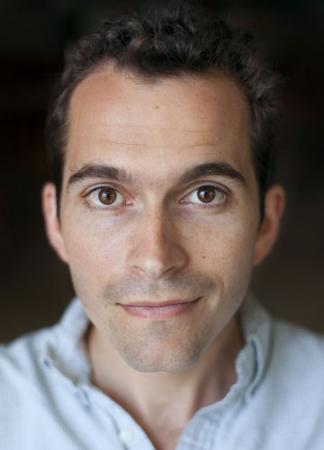
"What it looks similar is when you see somebody actively harm another person that triggers a potent automatic response," said Brown University psychologist Fiery Cushman. "You lot don't accept to think very deliberatively about it. You merely perceive it equally morally wrong. When a person allows harm that they could hands prevent, that actually requires more carefully controlled deliberative thinking [to view every bit wrong]."
In a written report published in advance online in the journal Social Cognitive and Melancholia Neuroscience, Cushman and his co-authors presented 35 volunteers with 24 moral dilemmas and lapses like the one involving the figure skaters. For specific lengths of time the volunteers would read an introduction to the incident, a clarification of the character'due south moral choices, and a description of how the character behaved. Then they'd rate the moral wrongness of the behavior on a scale from one to 5. All the while, Cushman and his co-authors, who were at Harvard University at the fourth dimension, tracked the blood flow in the volunteers' brains with functional magnetic resonance imaging scans.
Cushman expected to confirm what he had observed in behavioral experiments and published in 2006: that people employed conscious reasoning to arrive at the usual feeling, which is that actively caused harm is morally worse than the passively acquired damage.
Figuring he had a clever way to testify information technology physiologically, he and his team compared the brain scans of people who judged agile harm to be worse than passive harm to the scans of people who judged them as morally equal. His assumption was that those who saw a moral departure did and then past explicit reasoning. Such people should therefore have exhibited greater activity in the dorsolateral prefrontal cortex than those who saw no moral stardom. Just to Cushman's surprise, the greater levels of DPFC activity lay with those who saw active harm and passive harm as morally the same.
"The people who are showing this distinction are actually the ones who show the least evidence of deliberative, careful, controlled thinking," he said, "whereas the people who evidence no departure between deportment and omissions prove the most evidence of conscientious deliberative controlled thinking."
Social judgment
Cushman emphasized that his research does non suggest which moral judgment is right. Simply information technology is notable that our legal system enshrines the belief that agile harm is worse than passive harm.
As one instance, he cites a 1997 U.S. Supreme Court decision (Vacco v. Quill) in which the courtroom ruled that given explicit permission from a patient, a doctor cannot direct euthanize the patient, such every bit with an overdose of morphine, merely the physician can follow a patient's directive to finish life support or other treatment. In the case, the district court in New York initially ruled the way the Supreme Court ultimately did, but the appeals court in between ruled that euthanasia and ending life support were essentially the same.
Cushman said his new findings may exist useful because they depict the mechanisms underlying how they, and perhaps club in general, get in at moral judgments. Drawing on the metaphor offered past authors Max H. Bazerman and Ann E. Tenbrunsel in their ideals book Blind Spots, he suggests that the extra idea required to judge passive harm as morally wrong might exist analogous to a blind spot.
Much equally drivers larn to look over their shoulder before irresolute lanes, he said, people may want to examine how they feel about passive harm. Especially in specific, existent-life situations, they may still conclude that active harm is worse, but they'll at least have compensated for the automatic bias his inquiry suggests is there.
In improver to Cushman, other authors include Dylan Murray, Shauna Gordon-McKeon. Sophie Wharton, and Joshua Greene. The research was supported by the Arete Initiative and the National Scientific discipline Foundation.
Full example: Active or passive
Setup
Kelly is a effigy skater trying out for the Olympics. The final spot on the team will go to either her or Jesse, depending on the outcome of a contest. When Kelly goes to the pro shop to pick up her skates, she sees Jesse's skates lying on the counter.
Harmful human action
- Kelly realizes that she could loosen the screws on Jesse'south skates, causing her to autumn during the competition and lose. Information technology is probable that Jesse would likewise seriously injure herself during the fall.
- Kelly loosens the screws on Jesse's skates. Sure plenty, Jesse falls during the contest and Kelly makes the squad. Jesse as well severely injures herself.
Harmful omission
- Kelly sees that the screws are loose on Jesse'southward skates, which will cause her to autumn during the competition and lose. Information technology is likely that Jesse would also seriously injure herself during the fall.
- Kelly doesn't warn anybody about the loose screws. Certain plenty, Jesse falls during the contest and Kelly makes the team. Jesse also severely injures herself.

Source: https://news.brown.edu/articles/2011/12/moralilty
Posted by: fernandezexedger.blogspot.com
0 Response to "Is Doing Harm Always Worse Than Allowing Harm? Is It Always Possible To Draw A Line Between The Two?"
Post a Comment